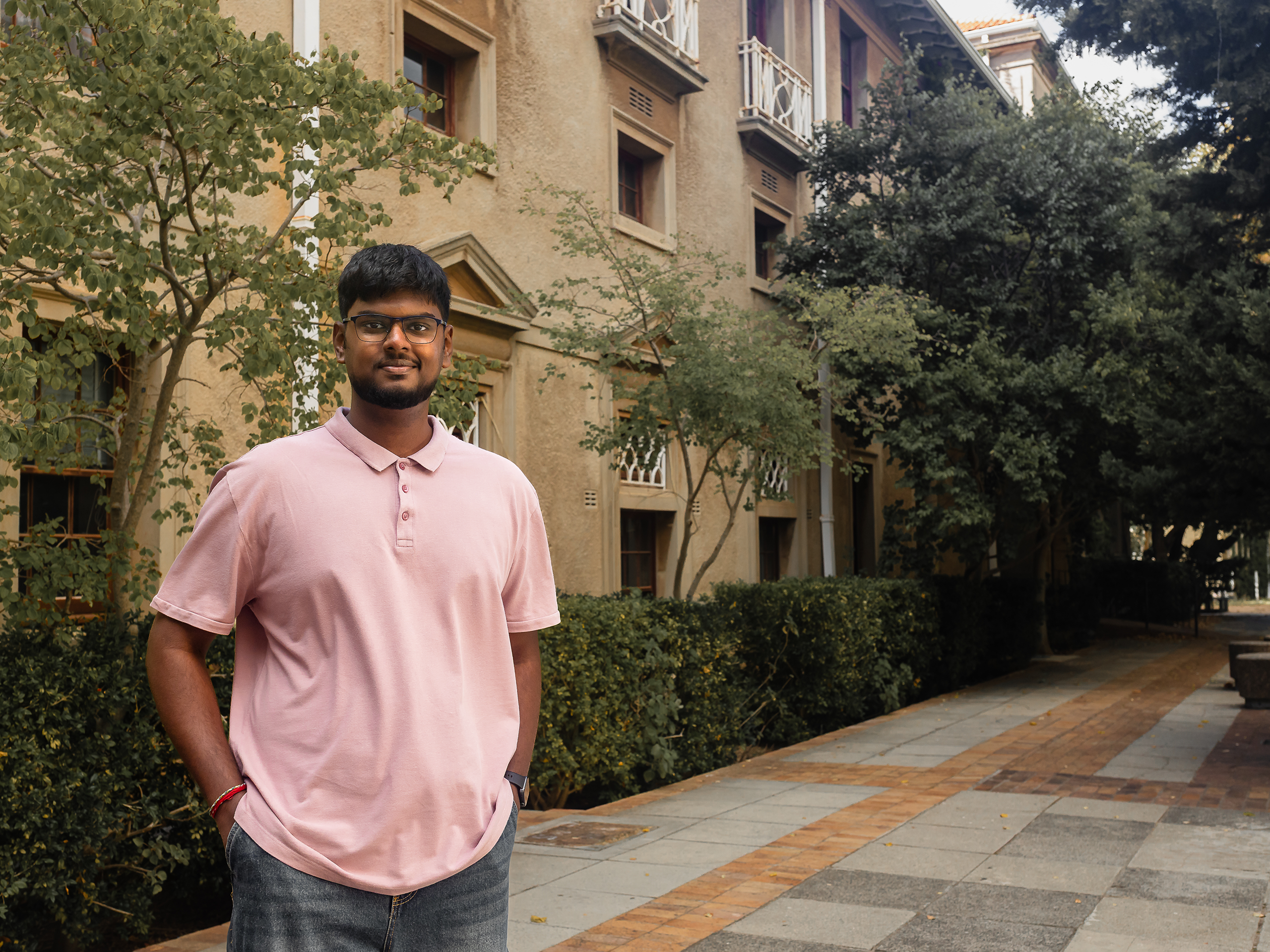
Rishen Krishna Moodley on discipline beyond matric
In 2016, South Africa’s education debate centred on one defining question: who gets access?
Ten years later, a generation that entered the system during that period is beginning to answer a different one: what is possible once you get there?
For students like Rishen Krishna Moodley, that answer is unfolding in real time. Access to education opened the door — but it was structure, discipline, and support from the Ruta Sechaba Foundation that helped him step through it and stay the course.
Moodley, from Durban, is a third-year Actuarial Science student at the University of Cape Town. His story is not only one of academic performance, but of sustained consistency in one of the country’s most demanding degree programmes.
A matriculant of Curro Heritage House, he consistently ranked among the top performers in his grade from Grade 8, maintaining averages in the 90s. He completed Grade 12 with seven distinctions and an average of 89.57%, including 100% in Mathematics and Information Technology, earning a Bachelor’s pass.
Beyond the results, he attributes much of his stability to structure and external support. As a beneficiary of the Ruta Sechaba Foundation, he says that backing helped him remain focused throughout his final school years.
He says the day he received his matric results remains memorable not for celebration alone, but for what it represented.
“There was a lot of pressure leading up to that moment, not just from the exams themselves, but from everything they represented in terms of my future,” he says.
“When I finally saw my results, the biggest feeling was relief that the hard work had paid off.”
For Moodley, the moment symbolised more than marks on a screen.
“It felt like a turning point. The late nights, the discipline and the support I had along the way all came together. It felt like the start of the next chapter.”
Before his final school year, financial pressure posed one of the biggest threats to his progress. Support from the Ruta Sechaba Foundation helped remove that burden and allowed him to focus fully on academic performance.
“RSF gave me a platform that allowed me to focus solely on my academics without having to worry about school fees. That support allowed me to meet the admission requirements for my degree and continue striving for excellence.”
The move from Durban to Cape Town also marked a major personal transition.
“What surprised me most after matric was how quickly responsibility shifts onto you,” he says.
“In high school there is structure. After matric, especially at university, that structure disappears, and you are expected to manage everything yourself.”
He says the first 100 days were defined by adjustment.
“The hardest part was adapting to the intensity and pace of university while managing everything independently.”
Moodley notes that university demanded a different approach to learning.
“Concepts do not always make sense immediately, and you are expected to engage with them more deeply and independently.”
He also challenges assumptions about top achievers.
“Top achievers are not inherently born smart. We provide a level of commitment that allows us to achieve the best outcomes.”
He rejects the idea that academic excellence requires sacrificing balance.
“I have a social life, hobbies and make time for spiritual and physical fulfilment. The key is routine.”
That routine was tested during a difficult second-year period when academic deadlines collided with his responsibilities as a tutor.
“I had tests approaching, assignments due, and students depending on me for support. It felt like there was not enough time.”
He managed the pressure by stepping back and rebuilding structure.
“I broke each task into smaller parts and prioritised them. Instead of trying to do everything, I focused on doing the next thing well.”
Now in his third year, Moodley says he wants to be remembered for hard work, resilience and eventually mentoring others in the way he was supported. He believes one principle matters most for learners entering life after matric.
“Routine is key. It does not need to be complicated. Even a small checklist for the day can make all the difference.”
Executive for Strategic Relations for Curro and the Ruta Sechaba Foundation, Natasha Mkhize, says Moodley embodies the spirit of excellence the Foundation seeks to nurture.
“Rishen is an outstanding young man who combines achievement with reflection. He does not simply look back at what he has done, he constantly asks what can be improved and what it will take to do better than yesterday. That mindset is the mark of true excellence.”
His journey from Durban to one of the country’s leading universities is a reminder that world-class futures are not reserved for a select few. With talent, consistency and the right support, excellence can begin anywhere.
As the Ruta Sechaba Foundation marks its 10-year anniversary this year, donors, partners and prospective applicants are invited to learn more about its work and opportunities by visiting rutasechaba.org.