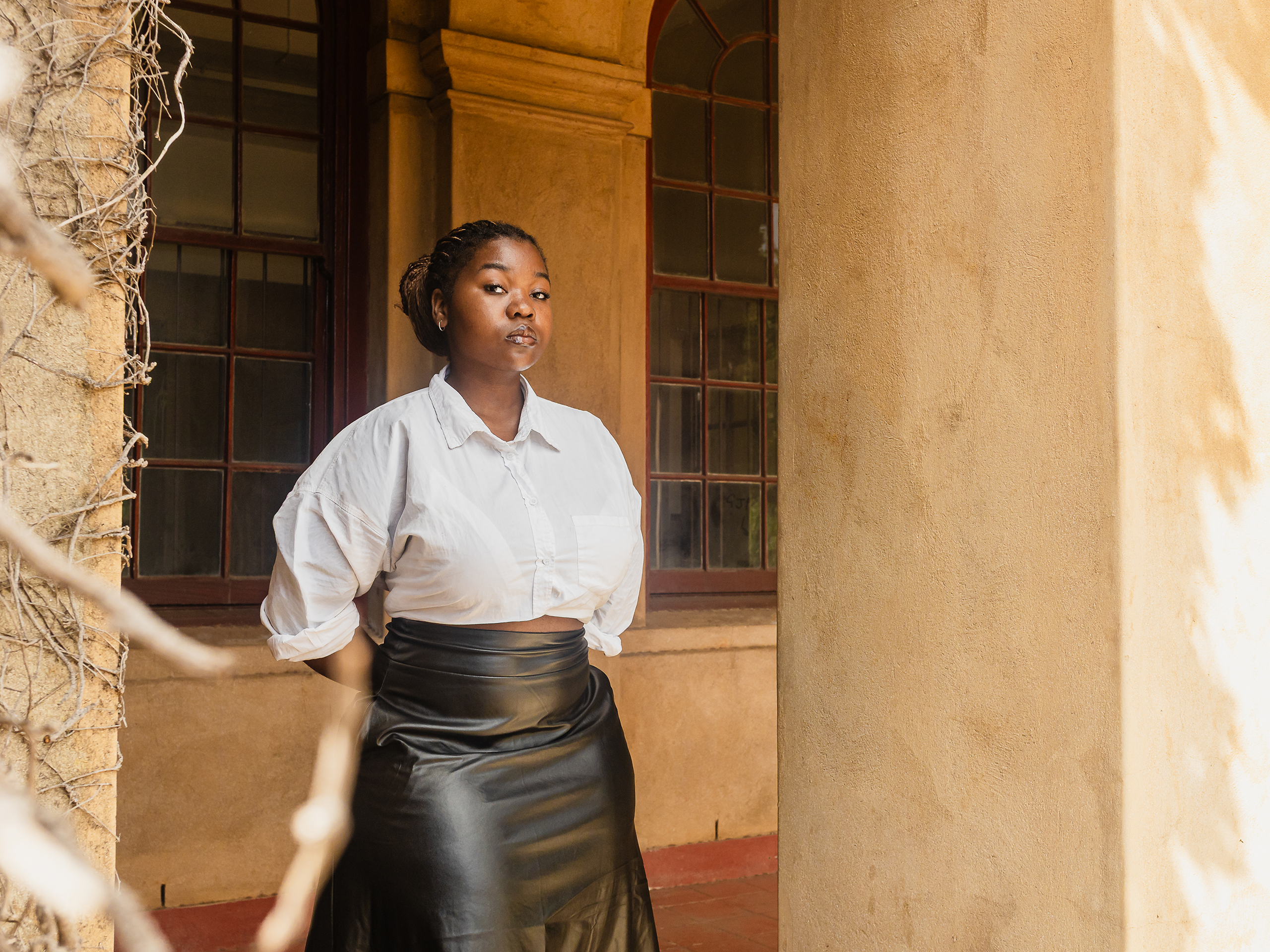
Simphiwe Kate Sakala on resilience beyond matric
In 2016, South Africa’s education debate was driven by one urgent question: who gets access?
In 2016, South Africa’s education debate centred on a single, urgent question: who gets access? A decade later, the young people who entered the system during that era are grappling with a harder one – what happened after matric?
For many learners, access is only the beginning. The real challenge lies in navigating the path from school to tertiary education and ultimately into meaningful long-term success. Through academic, financial and developmental support, the Ruta Sechaba Foundation works to help learners navigate that journey at every stage.
Founded on the belief that potential is evenly distributed, but opportunity is not, the Foundation has spent ten years walking alongside young South Africans through every stage of that journey– not just into university, but through it, and beyond. As it marks its 10-year anniversary, the organisation is giving voice to the generation it has supported, and asking the question that defines its mission: what becomes possible when a young person is truly not left alone?
Simphiwe Kate Sakala is one answer to that question.
A student at the University of Cape Town studying Economics and Politics, Sakala grew up in Johannesburg, raised by a single mother in difficult circumstances. She rose above her environment through grit, discipline and an unwavering sense of integrity – and through the sustained, purposeful support of the Ruta Sechaba Foundation at every critical turn.
She recalls the day she received her matric results as one of the most emotionally charged moments of her life.
“I remember how nervous I was. Everything in me felt tied to one single outcome,” she says. “For me, getting into university was not just a goal – it felt like the only door I had.”
The pressure, she explains, extended far beyond personal ambition.
“I was not only dreaming for myself. I was dreaming forward into a future I wanted to build for the generations that would come after me.”
Recognition as a top achiever brought new opportunities, but also new expectations – some of them quietly suffocating.
“People started to assume that I would always succeed, that I would always receive distinctions, that everything would simply fall into place for me, “she says. “It felt like I was no longer just a learner. I had become ‘the top achiever’, and that label carried real weight.”
While others assumed her future was secure, Sakala was still finding her footing, learning in real time how to carry expectation without being consumed by it. It was during this period that the Foundation’s support proved most meaningful.
The Ruta Sechaba Foundation’s work extends far beyond recognising academic achievement. Through financial support, mentorship and sustained guidance, the Foundation continues walking alongside its recipients as they navigate the often-difficult transition from school into tertiary education and adulthood – a period where many young people, including high achievers, are most at risk of losing confidence, direction or opportunity.
For Sakala, that presence was transformative.
“They supported me as a person. During a time when everything felt uncertain and overwhelming, they gave me something I genuinely needed: hope.”
That hope was not abstract. University, she discovered, demanded an entirely different version of herself.
“The pace is faster, the workload is heavier, and the expectations are far higher than anything I had encountered before. My first university test was a genuine wake-up call.”
She also navigated the quieter, less visible pressures – comparison, financial strain and the isolating feeling of building a future largely on her own.
“You scroll through your phone and see everyone else celebrating acceptances while you are still waiting. It feels like the world is moving and you are standing still,” she says. “And even when you do get there, university is expensive. Tuition, rent, daily living – it adds up in ways nobody fully prepares you for.”
These are the realities the Ruta Sechaba Foundation is designed to meet head-on. Its model recognises that access alone is not enough – that without sustained support, even the most talented young people can be undone by circumstances beyond their control.
“They reminded me to keep working hard, to keep pushing forward, and never to give up,” Sakala says. “They were an anchor during some of my hardest years.”
Now studying at UCT, she carries that foundation with her into everything she does. Her degree, she says, is not simply a qualification – it is preparation to lead and to advocate for those who will follow.
“I use my voice because I understand struggle. I am not fighting only for myself, but for everyone who comes after me.”
Natasha Mkhize, Executive for Strategic Relations at Curro and the Ruta Sechaba Foundation, says Sakala’s story captures the organisation’s purpose with rare clarity. “Simphiwe reflects what happens when opportunity meets potential – and when that potential is supported rather than left to chance. She is driven, purposeful and deeply committed to giving back. She is the future we believe in, and she is proof of what consistent, meaningful support can produce.”
That proof matters – because the need has not diminished. Ten years in, the Foundation continues to invest in young South Africans who have the hunger and the ability to transform their own lives and their communities, but who need a partner willing to walk the full distance with them.
Sakala’s message to young people leaving school is characteristically direct: “You do not need a perfect plan. You need hunger, curiosity and the courage to try, fail, and try again.”
Her journey from a challenging upbringing in Johannesburg to one of the country’s most respected universities is not simply an individual triumph. It is a testament to what becomes possible when talent meets tenacity – and when the right organisation refuses to let promise to go unsupported.
As the Ruta Sechaba Foundation celebrates its 10th anniversary, it invites donors, partners and prospective applicants to be part of the next decade of that work. To learn more or to get involved, visit rutasechaba.org.